Plan the Perfect Foodiemoon 2026 | Bliss Honeymoons
Plan the Perfect Foodiemoon: The Complete Guide for Couples Who Eat Well
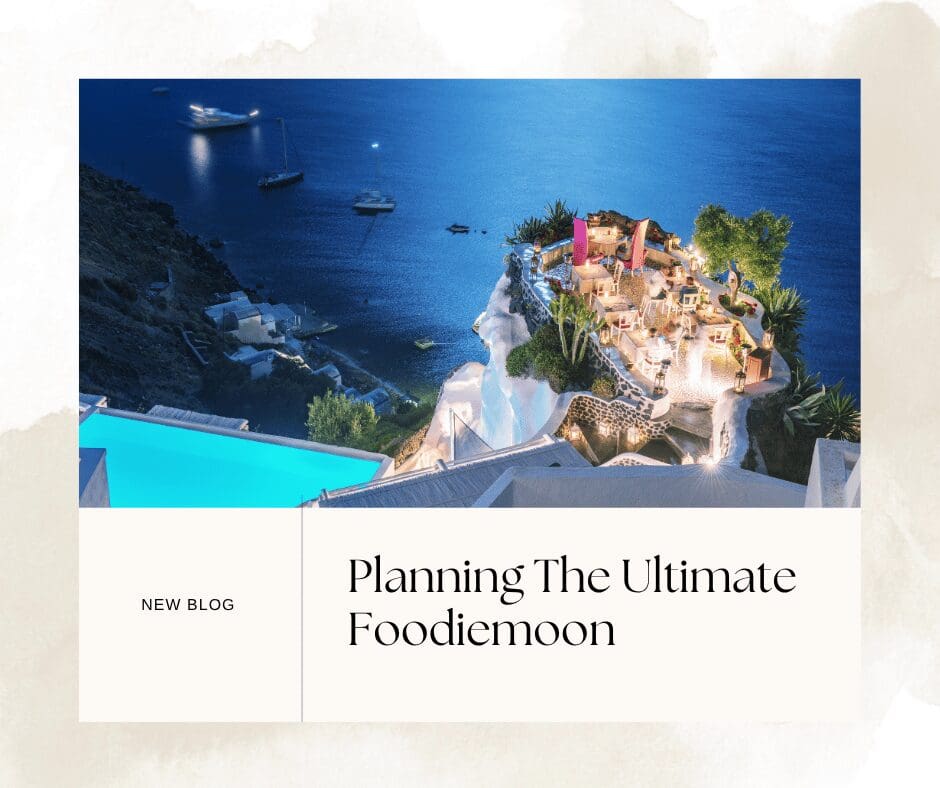
A foodiemoon is exactly what it sounds like: a honeymoon where great food isn't just a nice bonus, it's the whole point. Not just eating — experiencing. The private dinner on a terrace above the Amalfi Coast. The cooking class in a Balinese family kitchen. The omakase counter in Tokyo where you don't speak the language but you don't need to. The chocolate festival at Jade Mountain in St. Lucia. The tasting menu in Barcelona that lasts four hours and you're not once looking at your watch.
If you and your partner bond over food — if you plan vacations around restaurant reservations, if you come home from trips raving about what you ate more than where you stayed — then a foodiemoon isn't just a nice idea. It's the right idea. And after planning hundreds of them, I can tell you: the world has never had more extraordinary options for couples who eat well.
What Is a Foodiemoon?
The term "foodiemoon" — a mashup of foodie and honeymoon — has been around for over a decade, but the idea has matured considerably. Early foodiemoons were mostly about choosing destinations with good restaurant scenes. Today, a great foodiemoon is a fully curated experience: destination chosen for its culinary culture, accommodation chosen for its dining program, and specific food experiences — market tours, cooking classes, private dinners, tastings, chef's table reservations — planned as carefully as any sightseeing itinerary.
The rise of culinary tourism has made this easier than ever. Resorts compete heavily on their dining programs. Celebrity chefs partner with all-inclusive properties. Michelin stars are appearing in destinations — like Mexico's Riviera Maya and Thailand — that barely had fine dining a decade ago. For foodie couples, this is an extraordinary moment to be planning a honeymoon.
"The best meals of your life have a way of being the ones you remember most vividly from a trip. Plan around food and you'll plan around memories."
Best Foodiemoon Destinations in the World
These are the destinations we consistently recommend to foodie couples — ranked by the depth and quality of the culinary experience, not just the scenery.
No destination combines romance and food culture the way Italy does. The Amalfi Coast delivers cliffside dinners above the Tyrrhenian Sea, fresh-caught seafood, limoncello made from lemons grown on the cliffs above you, and Michelin-starred restaurants in Ravello, Positano, and Amalfi town. Tuscany offers vineyard stays, long truffle-hunting lunches, and the kind of food simplicity that is actually extraordinary — the best olive oil, the best bread, the best bistecca Fiorentina you've ever tasted. And Sicily, increasingly on radar for food travelers in 2026, is an entire island built around extraordinary ingredients: arancini, fresh pasta alla norma, cannoli, granita, and some of Italy's finest seafood.
Every region of Italy rewards slow travel and eating well. We recommend choosing one region rather than trying to cover the whole country — depth beats breadth on a foodiemoon.
- Amalfi Coast: Private terrace dinner at Le Sirenuse, boat day to find hidden sea caves for lunch
- Tuscany: Truffle hunting followed by a private lunch at a working farm estate
- Sicily: Street food tour of Palermo's Ballarò market, Duomo Ristorante in Ragusa (Michelin-starred)
- Everywhere: A hands-on pasta-making class — genuinely one of the best foodiemoon experiences in the world
Tokyo has more Michelin-starred restaurants than Paris, New York, and London combined. That single fact tells you everything you need to know about Japan as a foodiemoon destination. But it's not just the fine dining — it's the sushi counter where 12 courses of omakase costs $80 and is the best meal you've ever had; the ramen alley in a train station; the depachika (department store basement food halls) that are temples to produce and prepared food; the ryokan breakfast that is so considered and beautiful it becomes an event in itself.
Japan in 2026 is genuinely one of the best foodiemoon destinations in the world. Combine Tokyo (energy, restaurants, everything) with Kyoto (temples, kaiseki dinners, ryokans, tea ceremony) and possibly Osaka (Japan's unofficial street food capital) for a trip that is as culinarily rich as anywhere on earth.
- Tokyo: Omakase sushi counter, tsukiji outer market breakfast, department store food hall exploration
- Kyoto: Multi-course kaiseki dinner at a traditional ryokan, matcha tea ceremony
- Osaka: Dotonbori street food — takoyaki, okonomiyaki, kushikatsu
- Everywhere: A sake pairing dinner — one of the most underrated food experiences Japan offers
Spain's Basque Country — specifically San Sebastián (Donostia) — is the foodiemoon destination that serious food couples should have on their radar. The pintxos bars of the Old Town alone are worth the trip: counter after counter of extraordinary small bites, eaten standing, with txakoli wine, for almost nothing. And that's before you account for the constellation of Michelin-starred restaurants in and around the city, including Arzak, Mugaritz, and Akelarre. San Sebastián is where culinary travelers go when they want to eat the best food in the world.
Barcelona works beautifully as a combination trip — a few days in the city for architecture, markets (La Boqueria, Santa Caterina), and restaurant culture, then a train north to San Sebastián for the pure food pilgrimage. Ibiza, meanwhile, has evolved dramatically beyond its club reputation into a genuine food destination with outstanding seafood and Mediterranean cuisine.
- San Sebastián: Pintxos bar crawl in the Old Town, dinner at a Michelin-starred Basque restaurant
- Barcelona: Early morning at La Boqueria market, tapas at Bar Calders in Sant Antoni
- Spain generally: A private cooking class focused on regional cuisine — paella, jamón, seafood
Peru is the foodiemoon destination that serious food travelers keep to themselves. Lima has been named Latin America's best food destination consistently for years — and Central, led by Virgilio Martínez, has claimed the title of the world's best restaurant. The cuisine is extraordinary in its range: ceviche that redefines what the dish is, Nikkei fusion (Japanese-Peruvian), Chinese-Peruvian chifa, and traditional dishes built around ingredients — quinoa, potato varieties, ají peppers — that exist nowhere else on earth.
Combine Lima with Cusco and Machu Picchu for a foodiemoon that is also one of the world's great adventure experiences. The altitude of Cusco (11,000 feet) takes a day of adjustment, but the food, the Sacred Valley, and Machu Picchu itself make the combination genuinely unforgettable.
- Lima: Tasting menu at Central or Maido, ceviche at La Mar, Miraflores neighborhood exploration
- Sacred Valley: Farm-to-table lunch at Mil (Virgilio Martínez's mountain restaurant above Moray)
- Everywhere: Pisco sour pairing — Peru's national cocktail is genuinely excellent
Thailand produces one of the world's most beloved cuisines — and eating it in Thailand, made by Thais with fresh ingredients from local markets, is a completely different experience from any Thai restaurant you've ever visited. Bangkok's street food scene is legendary: pad thai made at a cart, mango sticky rice from a market stall, tom yum soup from a tiny shopfront that's been making the same recipe for three generations. And the cooking class tradition here is exceptional — a morning at a Chiang Mai cooking school where you shop the market, then cook and eat four dishes, is one of the most joyful foodiemoon experiences available anywhere.
- Bangkok: Street food tour of Chinatown (Yaowarat), rooftop dinner at Vertigo & Moon Bar
- Chiang Mai: Morning market visit followed by a full-day cooking class
- The Islands: Fresh seafood by the water — Koh Samui and Koh Lanta both deliver beautifully
Greek cuisine is having a genuine moment internationally — and in Greece itself, it's at its very best. Santorini's volcanic soil produces a white wine (Assyrtiko) that pairs extraordinarily with the island's fresh seafood. Crete — increasingly on the foodiemoon radar — is the real Greek food heartland: slow-cooked lamb, dakos salad with local cheese, fresh olive oil, and an agricultural richness that feeds the island's cooking at a profound level. Mykonos has evolved its restaurant scene considerably and now offers genuine fine dining alongside its famous social atmosphere.
- Santorini: Wine tasting at Santo Wines with caldera views, seafood dinner in Ammoudi Bay
- Crete: Agrotourism experience — visit a working olive farm, cheese dairy, and winery in one day
- Everywhere: Greek cooking class focused on mezze — a deeply sociable, genuinely fun experience
Best Caribbean Foodiemoon Destinations
The Caribbean doesn't get the credit it deserves as a food destination — the all-inclusive model has historically prioritized quantity over quality. But that's changing fast, and several Caribbean islands now offer genuinely extraordinary food experiences alongside the beaches and warm water that make the region irresistible for honeymooners.
St. Lucia
St. Lucia is our top Caribbean foodiemoon pick. The island's Creole cuisine — built around Indian spices, fresh seafood, and local fruits and vegetables — is unlike anything else in the Caribbean. Jade Mountain's Chocolate Festival in October is one of the most unique food events in the entire region. The Mango Madness festival in June is another not-to-miss. Off the resort, The Pink Plantation House in Castries, Spice of India in Gros Islet, and Masala Bay in Marigot Bay are all excellent. Anse Chastanet — our favorite St. Lucia resort — has an outstanding dining program with multiple restaurants, including beachside grilling and elevated Caribbean cuisine. Read our full St. Lucia foodiemoon guide →
Antigua
Antigua's culinary scene blends Caribbean, British, and Spanish influences into something distinctly its own. Jumby Bay, our top Antigua resort pick, serves up gourmet all-inclusive meals on a stunning private island. Off-property, Sheer Rocks in Saint Mary's is worth planning a dinner around — dramatic ocean views and exceptional food. The island's Mango and Pineapple Festival in August is a highlight for visiting foodies. Local dishes — fungie, ducana, saltfish, sugarcakes, tamarind stew — tell the story of the island beautifully. Read our full Antigua foodiemoon guide →
Jamaica
Jamaica is non-negotiable for serious foodies who love Caribbean flavor. Jerk — done the right way, at a roadside pit, not a resort approximation — is one of the great food experiences of the Caribbean. Beyond jerk, Jamaica has an entire culinary tradition built on fresh seafood, ackee and saltfish, festival bread, and Blue Mountain coffee that is among the world's finest. The Sandals resorts here have improved their dining programs dramatically — but get off-property at least once for the real Jamaica.
St. Croix
St. Croix is the under-the-radar Caribbean foodiemoon destination. Part of the U.S. Virgin Islands (no passport required for Americans), it draws heavily on Caribbean, European, and American influences. The Taste of St. Croix each April features over 50 local chefs and restaurants. Rum Runners, the Cultured Pelican, and Shoreline at Chenay Bay are consistent foodie favorites. Read our full St. Croix foodiemoon guide →
"Ask your resort about culinary programming before you book — the best resorts now offer cooking demonstrations, farm visits, local chef dinners, and market tours. These experiences are often free or low-cost for guests, and they're consistently the highlights couples mention when they come home."
Best All-Inclusive Resorts for Foodies
The reputation of all-inclusive dining has improved dramatically over the past decade — and the best properties now offer genuinely world-class culinary experiences alongside the convenience of the all-inclusive model. Here are the properties we consistently recommend to foodie couples who want the ease of an all-inclusive without sacrificing the quality of the food.
Xcaret Arte is in a class of its own for foodie all-inclusives. This 63-suite adults-only property features Michelin Star chefs, creative menus for every dietary preference, a chocolatería, and an approach to food that is genuinely artistic. It's smaller than most all-inclusives — which means the quality of attention in every dining experience is palpably higher. Everything here is outstanding, from the casual beachside options to the elevated fine dining.
El Dorado Royale's "Gourmet Inclusive Experience" is exactly what it claims to be. Ten elegant à la carte restaurants and five Gourmet Corners give foodie couples an extraordinary range without ever leaving the property. The team here has also forged relationships with neighboring sister properties — meaning guests can dine at El Dorado Casitas Royale and Generations Riviera Maya as well, effectively tripling the restaurant options. One of the best-value foodie all-inclusives in Mexico.
UNICO's approach is locally-sourced, globally-inspired — and it works beautifully. Ten dining options range from elevated fine dining to casual beachside, with locally-grown ingredients woven throughout every menu. The Summer Superbia culinary event is a genuine food festival within the resort — one of the most impressive culinary events an all-inclusive offers. UNICO's commitment to regional flavors makes every meal feel rooted in Mexico rather than generic international cuisine.
Barbados has arguably the best food scene in the English-speaking Caribbean — and Sandals Royal Barbados puts you right in the middle of it. Six restaurants on property plus access to the neighboring Sandals Barbados, and a butler service that ensures the most discerning foodie guests get exactly what they need. Off-property, Barbados's restaurant scene is excellent — The Tides, Cin Cin, and the fish fry at Oistins on Friday nights are all worth experiencing.
Curaçao brings a distinctly different culinary identity to the Sandals portfolio — South and Central American influences, Spanish tapas at La Palma, Asian flavors, and outstanding Caribbean seafood at The Strand. The island's proximity to Venezuela brings a richness to the local food culture that shows up beautifully in the resort's kitchen. Willemstad, Curaçao's UNESCO capital, has a vibrant local restaurant scene that rewards an evening off-property.
Foodie Experiences Worth Planning Around
The difference between a good foodiemoon and a great one often comes down to the specific experiences you plan — not just where you eat, but how you engage with food at your destination. These are the experiences foodie couples consistently come home raving about.
- A cooking class in the destination's native cuisine. Japan, Thailand, Italy, Greece, Mexico, and Bali all have exceptional cooking class cultures. Half a day learning to make pasta in Tuscany or pad thai in Chiang Mai is one of the most joyful and memorable experiences a foodiemoon offers — and you bring the skill home with you.
- A chef's table or omakase experience. Sitting at the chef's counter and having the kitchen cook whatever they feel like cooking that night is an experience that can't be replicated. Japan does this best, but chef's table experiences are available at extraordinary restaurants worldwide.
- A private dinner. Whether it's a candlelit table on your overwater deck, a torchlit beach dinner arranged by your resort, or a private terrace at a Michelin-starred restaurant — one completely private dinner is the foodiemoon experience most couples put at the top of their list.
- A market visit. The best market visits are early morning, when the serious cooks are shopping. La Boqueria in Barcelona, Tsukiji outer market in Tokyo, Chiang Mai's Warorot Market, or a local Caribbean market — they're all windows into a food culture that a restaurant alone can't provide.
- A wine, sake, or spirits tasting. Santorini's Assyrtiko wine. Tuscany's Super Tuscans. Japanese sake. Peruvian pisco. Barbados rum. Pairing a serious tasting with your destination adds a layer of food education that enriches every meal that follows.
- A food festival or culinary event. St. Lucia's Chocolate Festival (October), St. Croix's Taste of St. Croix (April), Antigua's Mango and Pineapple Festival (August) — if your honeymoon dates align with a local food event, plan around it. These experiences are often free or very inexpensive and completely unforgettable.
How to Plan Your Foodiemoon
A foodiemoon requires a little more intentional planning than a standard honeymoon — not more work, but more forethought. Here's how we approach it with clients:
- Choose your destination based on food culture first. Not just "does it have good restaurants" but "is food genuinely central to life here?" Italy, Japan, Spain, Thailand, Peru, and Greece all pass this test easily. The Caribbean passes for specific islands. Not every beautiful honeymoon destination is a great foodiemoon destination.
- Tell your travel specialist what you love to eat. Not just cuisine types — be specific. Do you love seafood? Hate cilantro? Are you vegetarian? Do you want Michelin stars or street food or both? The more specific you are, the better we can match you to the right destination and the right property.
- Book restaurant reservations before you leave home. The best restaurants in Japan, Italy, and Spain book up months in advance. Your travel specialist can often help with reservations — or at minimum tell you which ones require advance booking and which are walk-in only.
- Balance the indulgence. A week of twelve-course tasting menus is genuinely exhausting — and expensive. The best foodiemoons mix a few extraordinary meals with simpler, more casual eating. The best lunch you have in Italy might be at a trattoria with paper tablecloths that costs $20 per person.
- Build food experiences into your daily itinerary. Not just dinners — morning market visits, afternoon cooking classes, lunchtime wine tastings. Food is the thread that connects every day of a great foodiemoon.
- Consider shoulder season. The best food experiences — cooking classes, chef's table seats, coveted restaurant reservations — are more available and more personal outside peak tourist season. May–June and September–October are ideal for most European and Caribbean foodiemoon destinations.
"The couples who have the best foodiemoons are the ones who give themselves permission to be unscheduled. The best food discovery of your trip will probably happen when you wander into a place because it looked interesting, not because it was on a list. Plan the anchors — one or two special dinners, a cooking class, a market visit — and leave the rest loose."
Ready to Plan Your Foodiemoon?
Tell us where you want to go, what you love to eat, and how much experience with great food matters to you. We'll match you with the right destination, the right resort, and the right culinary experiences — and make sure the reservations that matter are locked in before you leave.
Schedule Your Free Consultation →